Sean CoughlanRoyal correspondent
King Charles has shared “good news” about his cancer, saying in a personal message that early diagnosis and “effective intervention” means his treatment can be reduced in the new year.
In a recorded video message broadcast on Channel 4 for the Stand Up To Cancer campaign, the King said: “This milestone is both a personal blessing and a testimony to the remarkable advances that have been made in cancer care.”
This news that he is responding well to treatment is the biggest update on the King’s health since he revealed his diagnosis in February 2024.
The type of cancer has not been identified and treatment and monitoring will continue, but he said: “Early diagnosis quite simply saves lives.”
According to Buckingham Palace, the King’s recovery has reached a very positive stage and he has “responded exceptionally well to treatment”, so much so that doctors will now move his treatment “into a precautionary phase”.
The regularity of treatment is going to be significantly reduced – but the King, 77, is not described as being in remission or “cured”.
“Today I am able to share with you the good news that thanks to early diagnosis, effective intervention and adherence to ‘doctors’ orders’, my own schedule of cancer treatment can be reduced in the new year,” the King said in his speech.
The video message, recorded in Clarence House two weeks ago, was played in the Stand Up To Cancer show on Channel 4 on Friday evening, in a fundraising project run with Cancer Research UK.
The campaign encourages more people to get tested for cancer and to take advantage of national screening schemes – and the King’s message emphasised the importance of checks to catch cancer at an early stage.
“I know from my own experience that a cancer diagnosis can feel overwhelming. Yet I also know that early detection is the key that can transform treatment journeys, giving invaluable time to medical teams,” said the King.
Early detection could be a lifesaver, he said: “Your life, or the life of someone you love, may depend upon it.”

 PA Media
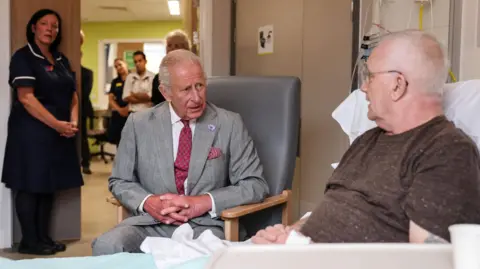
The King also spoke of how much he had been “profoundly moved by what I can only call the ‘community of care’ that surrounds every cancer patient – the specialists, the nurses, researchers and volunteers who work tirelessly to save and improve lives”.
Prime Minister Sir Keir Starmer said the King’s announcement was a “powerful message”.
“I know I speak for the entire country when I say how glad I am that his cancer treatment will be reduced in the new year,” he added.
Until now the King has said little publicly about his illness.
He didn’t seem to want to be defined by the disease and his approach has been to keep working, with a busy schedule including overseas trips and hosting state visits, including last week’s by the German president.
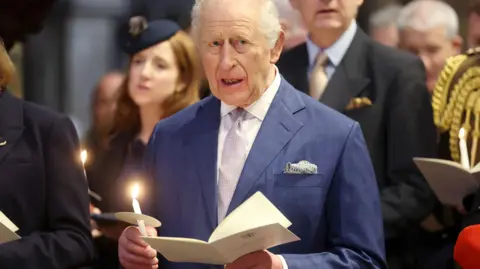
A couple of days ago he was sending a message of optimism and seasonal “hope”, when he attended an atmospheric, candle-lit Advent service at Westminster Abbey.
The Stand Up To Cancer show, presented by celebrities including Davina McCall, Adam Hills and Clare Balding, has urged people not to be frightened of getting cancer checks.
In particular, the show has appealed to the estimated nine million people in the UK who Cancer Research UK says are not up to date with NHS screening schemes, offering an online checker to let people see if they are eligible for tests for breast, bowel and cervical cancer.
The King said it “troubles me deeply” that this represents nine million missed opportunities to catch cancer early – and he urged people to use the screening checker online tool.
“The statistics speak with stark clarity. To take just one example: When bowel cancer is caught at the earliest stage, around nine in 10 people survive for at least five years. When diagnosed late, that falls to just one in 10,” he said.
According to royal sources, the King’s reference to bowel cancer should not be seen as linked to his own condition, and prostate cancer has previously been ruled out.
In an attempt to demystify cancer checks and show the value of early diagnosis the Stand Up To Cancer show had a live broadcast from cancer clinics at Addenbrooke’s and Royal Papworth hospitals in Cambridge.
“I want to take the fear out of cancer screening and show everyone that they are not on their own in this,” said McCall, 58, who recently said she was recovering from breast cancer surgery.
 Reuters
Currently in the UK, there are three NHS cancer screening programmes – for bowel, breast and cervical cancer – available to certain age groups.
A new lung cancer screening programme is also being slowly rolled out for anyone at high risk of developing the disease, specifically targeting people aged 55-74 years old, who currently or used to smoke.
Men may enquire about prostate cancer checks, but there is no national programme in place.
The Stand Up to Cancer project, which has raised £113m since 2012, is funding 73 clinical trials involving 13,000 cancer patients.
Michelle Mitchell, chief executive of Cancer Research UK, said public figures speaking openly about cancer can encourage others to have a check up.
“Spotting cancer early can make a real difference and provides the best chance for successful treatment,” she said.

#King #Charles #shares #good #news #cancer #treatment #reduced