Channeling His Inner-Martian
As his war in Iran has imploded, his poll numbers have plummeted, the U.S. economy has cratered, and he finds himself in the grip of a steep cognitive decline, President Donald Trump has increasingly lashed out, calling for cataclysm, slaughter, and even genocide. As he tries desperately, if ham-handedly, to extricate himself from a losing war, the commander-in-chief of the world’s most destructive military offers up deranged rants, baying for blood and issuing orders that throw the concept of proportionality in warfare out the window.
Trump’s bloodthirsty rhetoric has been borne out in asymmetrical slaughter, with Iranian fatalities exceeding American deaths by multiple orders of magnitude. And this follows similarly lopsided casualty tolls in Trump’s conflicts in Somalia, Venezuela, Yemen, and on the high seas. This low-risk butchery masquerading as warfare harkens back to 19th-century extermination campaigns in which so-called inferior races were massacred in spectacles of slaughter — colonial violence that wiped out ethnic groups and set the stage for 20th-century genocide.
“Every time Iran kills an American Soldier, they will pay for that killing many times over!” Trump recently announced on Truth Social. “This directive has been passed on to Secretary of War, Pete Hegseth, Chairman of the Joint Chiefs of Staff, Daniel Caine, and every Leader in the Military.”
This unhinged command for disproportionate retaliation — which may amount to a violation of international humanitarian law — was featured, mostly without further remark, in news reports with bland headlines, like “Trump pays respects to 4 US service members killed in the Middle East.” It was also, for example, tucked deep inside and presented without further comment in a New York Times article about impending testimony before the Senate Appropriations Committee by Hegseth and Caine.
Trump’s order, and the matter-of-fact coverage from the Times, reminded me of a report by a different Times, almost exactly 199 years earlier: an article from Van Diemen’s Land, the Ireland-sized island to the southeast of Australia that we now know as Tasmania.
White settlers poured onto the island in the early 1800s, wiping out the kangaroos and replacing them with sheep. They treated the Indigenous people no differently. “Thousands were hunted down like wild beasts,” according to the local press. When one of the white people were killed by locals, the Colonial Times reported that other settlers exacted revenge on the Indigenous people that left “sixty of them killed and wounded.” The next year, when members of settler police and military forces were pelted with stones, they responded with gunfire and a bayonet charge that “killed seventy of them, dragging the women and children from the crevices of the rocks, and dashing out their brains.”
The slaughter in Tasmania was the inspiration for author H.G. Wells’s late 19th-century sci-fi classic “War of the Worlds,” in which Martians with superior technology, advanced firepower, and no compunction about annihilating humanity invade England, laying waste to London and driving out its population. “And before we judge of them too harshly we must remember what ruthless and utter destruction our own species has wrought,” the narrator says in the book’s open. “The Tasmanians, in spite of their human likeness, were entirely swept out of existence in a war of extermination waged by European immigrants, in the space of fifty years. Are we such apostles of mercy as to complain if the Martians warred in the same spirit?”
“Are we such apostles of mercy as to complain if the Martians warred in the same spirit?”
When lawyer Raphael Lemkin formulated the idea of “genocide” after World War II, almost 50 years after Wells wrote “War of the Worlds,” he considered Tasmania a historical case study of his concept. It’s unclear if Trump ever read “War of the Worlds,” though he attended the New York City premiere of the 2005 Steven Spielberg film adaptation; I doubt he understood Wells’s allegory, presuming he knows what an allegory is.
The Tasmanian carnage was part of an age of slaughter and genocide carried out across the globe by European powers and the United States. Trump has long been in the thrall of the precepts of this era of colonial conquest: Might makes right; territorial acquisition through armed intervention; and colonial relationships with, and resource extraction from, conquered foes and weaker nations.
Trump often invokes and praises Andrew Jackson, his 19th-century predecessor in the White House, who owned slaves and implemented a policy of “Indian removal” that culminated in the Trail of Tears, the military’s forced displacement of Native Americans, during which thousands died. Trump advocated “furthering President Jackson’s legacy, expanding his vision, [and] honoring his memory” earlier this year, pronouncing that Old Hickory embodied the “best of the American Spirit.” Trump has even employed America’s contribution to the eradication of indigenous peoples as a punch line. He has made light, on social media, not only of the Trail of Tears but also the Army’s massacre of hundreds of Native Americans at Wounded Knee in South Dakota.
Even the Army’s official history portrays Wounded Knee as a Tasmanian-scale slaughter in which an effort to disarm a group of Lakota religious revivalists resulted in an errant shot, possibly an accidental discharge, that “led immediately to heavy and indiscriminate firing from soldiers,” including the use of artillery, “despite the presence of numerous noncombatants.” In the end, up to 300 Lakota, including women and children, lay dead while “Army casualties totaled 25 killed and 39 wounded, some of whom likely were hit by friendly fire.”
Such disproportionate mass killings and exterminations were a hallmark of the 19th century. This “destruction of the ‘inferior races’ of four continents prepared the ground for the destruction of six million Jews in Europe,” as the author Sven Lindqvist observed, in his classic text “Exterminate All the Brutes.” We look back on these Holocaust-precipitating slaughters as beyond abhorrent. Or at least we did.
The death toll disparity at Wounded Knee doesn’t compare to the carnage of Trump’s war on Iran. The estimated 3,375 to 6,000 Iranian deaths dwarf the 19 U.S. deaths by 180 to 320 times, or more than two orders of magnitude. (The official U.S. Iran war death toll stands at 18, with the Pentagon omitting one widely reported loss.) The 60-to-1 Tasmanian toll of dead and wounded is a similar ratio as the estimated 39,806 total Iranian casualties compared to the official U.S. count of more than 700 troops who have been killed or wounded.
Trump has also repeatedly touted the lopsided nature of his punitive expedition in Venezuela, a short war in which the U.S. deposed and kidnapped President Nicolás Maduro, creating a de facto U.S. colony run by a quisling. “To have a few injuries, but no death on our side, is really amazing,” Trump bragged after the invasion, later comparing the lack of U.S. fatalities to the substantial death tolls of the (much longer) Korean and Vietnam wars. The 100 or more Venezuelan and Cuban military personnel and civilians killed compared with a handful of U.S. injuries shares a lineage of battlefield massacres like the 1863 U.S. slaughter of 250 to 500 Shoshone — including at least 90 women, children and infants — at Bear River at a cost of 24 U.S. troops, and the up to 6,000 Zulus armed with shields and spears cut down by Gatling guns and artillery compared with 10 British troops killed at Ulundi in southern Africa in 1879.
Trump’s 2025 war against the Houthi government in Yemen — Operation Rough Rider — was similarly lopsided. The airstrike monitoring group Airwars tracked reports of at least 224 civilians in Yemen killed by U.S. airstrikes. This nearly doubled the civilian casualty toll in Yemen from U.S. attacks since 2002, meaning that almost as many civilians were reportedly killed in 52 days as the previous 23 years of airstrikes and commando raids combined. The Yemen Data Project put the death toll at 238 civilians, at a minimum, and another 467 civilians injured. The U.S. also killed hundreds of Houthi fighters and numerous Houthi leaders, according to CENTCOM spokesperson Dave Eastburn, who referred to “credible open sources” citing 650 Houthi casualties. The U.S. did not suffer a single reported fatality during the campaign. And Trump’s relentless strikes in nearby Somalia have amounted to up to 420 deaths at a cost of zero American lives.
The Trump administration’s boat strike campaign in the Caribbean Sea and Pacific Ocean, which has killed at least 221 people without the loss of even one U.S. life, is a still more egregious slaughter. In this case, only unarmed civilians are targeted, victims akin to the fleeing Tasmanian women and children who had their skulls bashed in.
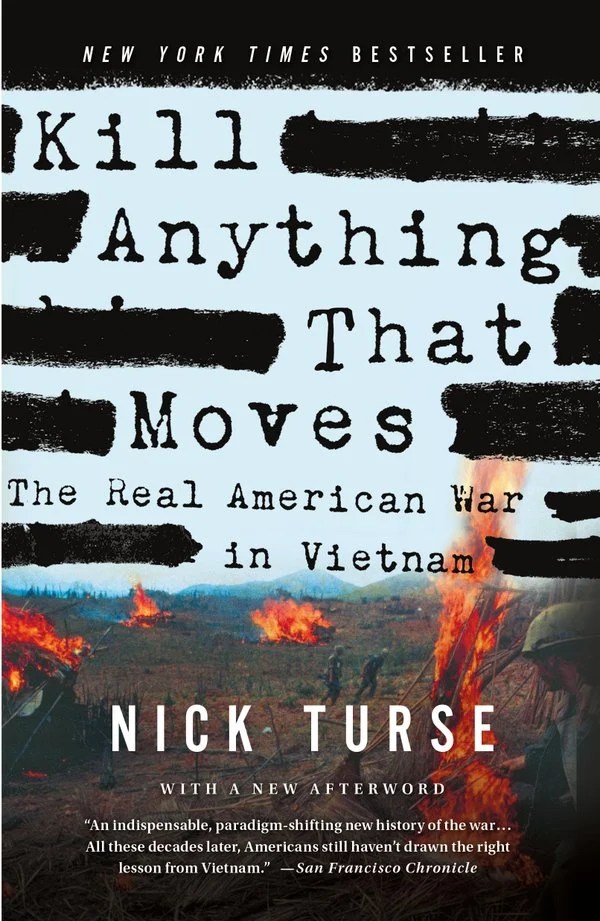
There are, of course, myriad differences between Trump’s ongoing war on the world and 19th-century colonial extermination campaigns in Africa, America, Australia, and elsewhere. Trump doesn’t, for example, explicitly assert racial superiority as a reason for his military interventions even if he often lapses into racist rants and is making war in Somalia while deriding Somalis as “garbage.”
But Trump’s more than 20 military interventions, armed conflicts, and outright wars have heightened the increasing trend toward “riskless warfare,” a term coined more than a quarter century ago by Paul Kahn, the director of Yale Law School’s Schell Center for International Human Rights. “It is an image of warfare without the possibility of chivalry,” the prescient Kahn later observed. “At the heart is a violation of the fundamental principle that establishes the internal morality of warfare: self-defense within conditions of reciprocal imposition of risk. Without the imposition of mutual risk, warfare is not war at all.”
Earlier this decade, in a study of drone warfare, Neil Renic, a scholar of military ethics, refined the concept as “radical asymmetry,” in which “one side has, in a practical sense, overcome the type and degree of physical vulnerability that has long been regarded as an expected and unavoidable feature of war.” Renic sees the drift toward unilateral violence leading to the increasing “perception of the weaker party … from an opponent to be fought and overcome, to one that must be hunted and done away with,” contributing to “dehumanization” of the enemy which, “in some cases … has led to a more severe decline in the targeting practices of the United States, from the morally questionable to the morally indefensible.” This feature of modern warfare harkens back to the age of extermination, when Tasmanians and others were also hunted and done away with.
As Trump has reveled in asymmetrical body counts and called for more disproportionate deaths, he has increasingly fancied himself an alien destroyer like Wells’s Martians; even if he himself doesn’t quite realize it. In one bizarre AI-slop image he posted on Truth Social as the Iran war went south, Trump appears to be striding from a spaceship — on some platform high above Earth — as legions of weapons-toting alien warriors flank him. In another, a gigantic Trump is seated at a command console in a space station floating high above the world. On screens above him, we see huge explosions apparently going off simultaneously back on Earth. On still another, an indistinct country is seemingly being ravaged by lasers.
“Then in a moment the Heat Ray was brought to bear, and the town became a heap of fiery ruins,” wrote Wells in “War of the Worlds,” describing the Martians’ weapon of mass destruction. “The houses caved in as they dissolved at its touch and darted out flames; the trees changed to fire with a roar.” Wells referenced the “massacre of mankind” and “the rout of civilization.” As Trump has made disproportionate slaughter his signature accomplishment from Latin America to the Middle East to Africa, he has channeled his inner Martian. “A whole civilization will die tonight, never to be brought back again,” he wrote of Iran on Truth Social, promising the “entire country could be taken out” and warning he might bomb Iran “back to the Stone Ages.”
Trump’s unhinged rhetoric is further driven home by the remaining imagery in the command-console post: a mushroom cloud from a monstrous nuclear blast with text on a screen announcing “target destroyed,” while a glowering Trump is poised to push a glowing red button that suggests he is about to incinerate the planet. Trump’s annihilationist fantasies are especially disturbing since he controls a nuclear arsenal that can destroy the world many times over. (“We have enough nuclear weapons to blow up the world 150 times,” was how Trump put it.)
Iranians, Latin Americans, Somalis, and Yemenis have all been in the crosshairs of America’s lopsided killing campaigns during his second term, but in this new age of slaughter, all of us are potentially targets in Trump’s war on the world.
#President #Promises #Massacre