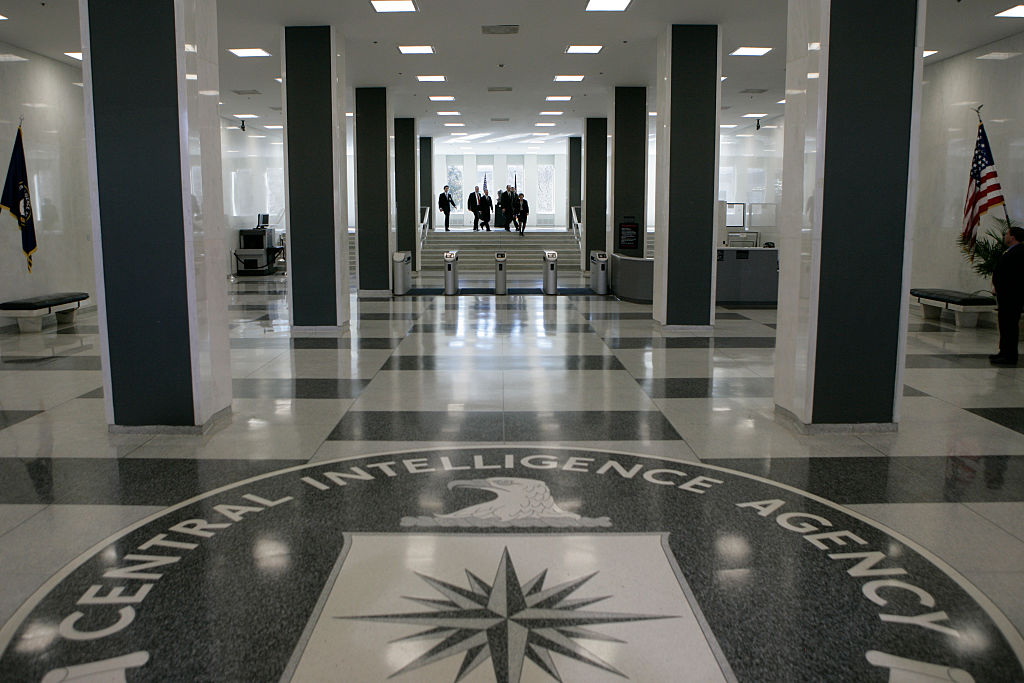
The Democratic Party is rife with internal caucuses and factions. There’s the Congressional Progressive Caucus, the Congressional Black Caucus, the Blue Dog Coalition, the “Squad,” and so on. But since 2019, when Elissa Slotkin and Abigail Spanberger first took seats in the House of Representatives, the party has had another, more sinister emerging faction: the CIA Spook Caucus.
In the last seven years, the Spook Caucus has only gained in strength. Both of its core members have graduated from the House to higher office, with Slotkin elected to the Senate in 2024 and Spanberger elected the governor of Virginia the following year. Soon afterward, Spanberger was selected by the Democratic leadership to deliver the rebuttal to Donald Trump’s 2026 State of the Union Address, which elevated her to the national stage. Slotkin, meanwhile, has floated the idea of a 2028 presidential run.
And in the 2026 midterms, the Spook Caucus might expand further: In the Democratic primary for Virginia’s 8th Congressional District, former CIA officer Adam Dunigan is running for the opportunity to challenge GOP nominee Anthony Sabio, who is also ex-CIA. But if you happen to care about concepts like “human rights” or “democracy,” this influx of intelligence operatives into our elections is extremely bad news.
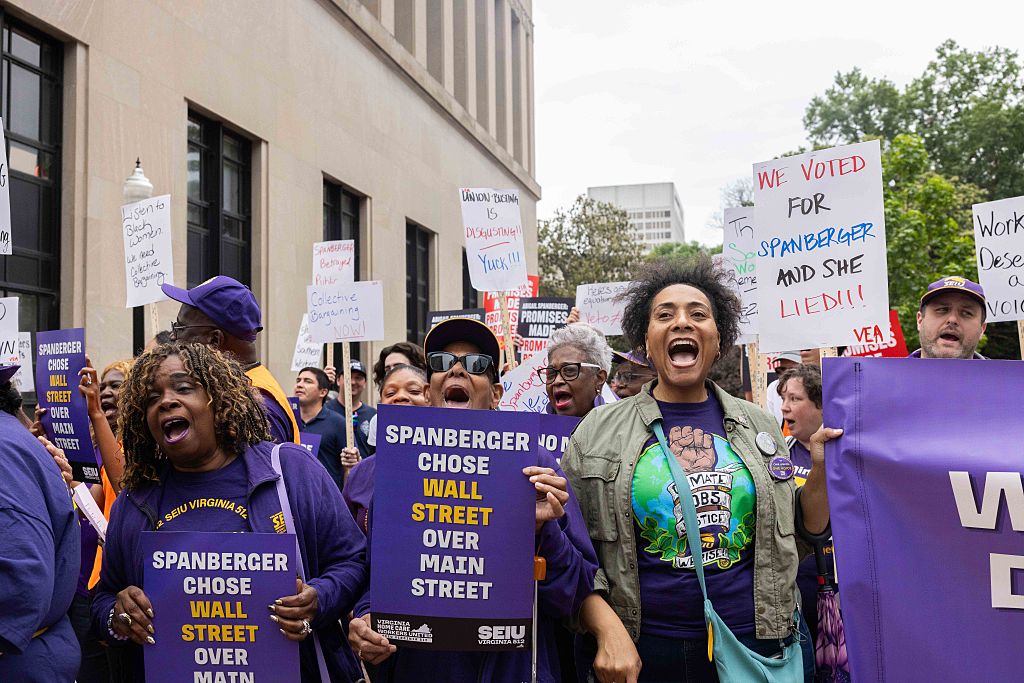
Spanberger’s honeymoon period with the Virginia Democrats is already over. Less than a year into her tenure as governor, she has vetoed 31 of the General Assembly’s bills, including “high-profile Democratic priorities” like collective bargaining rights for public workers and protections against ICE agents making warrantless arrests inside courthouses. On the labor bill, local unions say Spanberger betrayed a campaign promise she’d made to them. After vetoing two bills to limit ICE arrests, the ACLU of Virginia said her actions “constitute a voluntary surrender” to the Trump administration’s immigration agenda.
But this about-face shouldn’t be surprising, because the public doesn’t really know who Abigail Spanberger is or what she believes, deep down. That’s the problem with electing a CIA officer: They’re professionally trained liars. In a 2025 interview with the Washington Post, Spanberger said she used to have five different passports and identities: “I would travel in ‘true name,’ but then I would meet people not in ‘true name.’” The profile explicitly calls this spycraft “interpersonal skills transferable to politics.” In other words, this is someone who was accustomed to saying whatever people want to hear while concealing her true intentions. So whenever she speaks to Virginia voters, they have no way of telling whether she’s “in true name” or not. The unions found that out the hard way.
As usual, then, we have to judge by actions over words. With this spring’s veto spree, Spanberger’s actions are wildly out of step with the wishes of the voters who elected her, who overwhelmingly support unions and are growing more distrustful of Immigration and Customs Enforcement. (Seeing your fellow Americans shot dead in the street will do that.) But the vetoes are perfectly in tune with the interests of the national security state, from the drug enforcement agents who still want to make weed busts to ICE itself. Those are Spanberger’s colleagues, and the former CIA agent has moved to protect their power to surveil and police the people she supposedly represents.
Instead, she’s reserved her harshest attacks for socialists. In 2020, after Joe Biden squeaked his way into the presidency, Spanberger told party leaders, “We need to not ever use the word ‘socialist’ or ‘socialism’ ever again,” a clear shot at rising left-wing leaders like Bernie Sanders and Alexandria Ocasio-Cortez. It was an intervention in the ongoing conflict over the future of the Democratic Party, intended to prevent it from ever becoming a truly progressive one — as the Bezos-owned Washington Post also noted with approval.
Hostility to socialists is baked into the institutional culture of the CIA. It’s practically the agency’s reason for existing, and over the course of the 20th century, the CIA and its handpicked dictators massacred countless socialists around the world, from overthrowing President Salvador Allende in Chile, to sponsoring terrorist attacks against Cuba, to the mass slaughter of Indonesian communists via the “Jakarta Method.” Today, though, Spanberger’s anti-socialist stance is directly at odds with the will of Democratic voters, who now approve of socialism at a higher rate (66 percent) than capitalism (42 percent).
What about Slotkin, who now says she won’t rule out a run for president? Like Spanberger, her track record with the CIA is a black box. On her official biography webpages, we’re told only that she chose to join the agency shortly after 9/11, and served “three tours in Iraq alongside the U.S. military” as a “Middle East analyst.” In a 2020 interview with the New Yorker’s Isaac Chotiner, she volunteered that she was specifically an “Iraqi Shia-militia expert.” After that, it was on to a role as a national security adviser for both the late Bush and early Obama administrations, a few years as an acting assistant secretary of defense, and then the House and Senate.
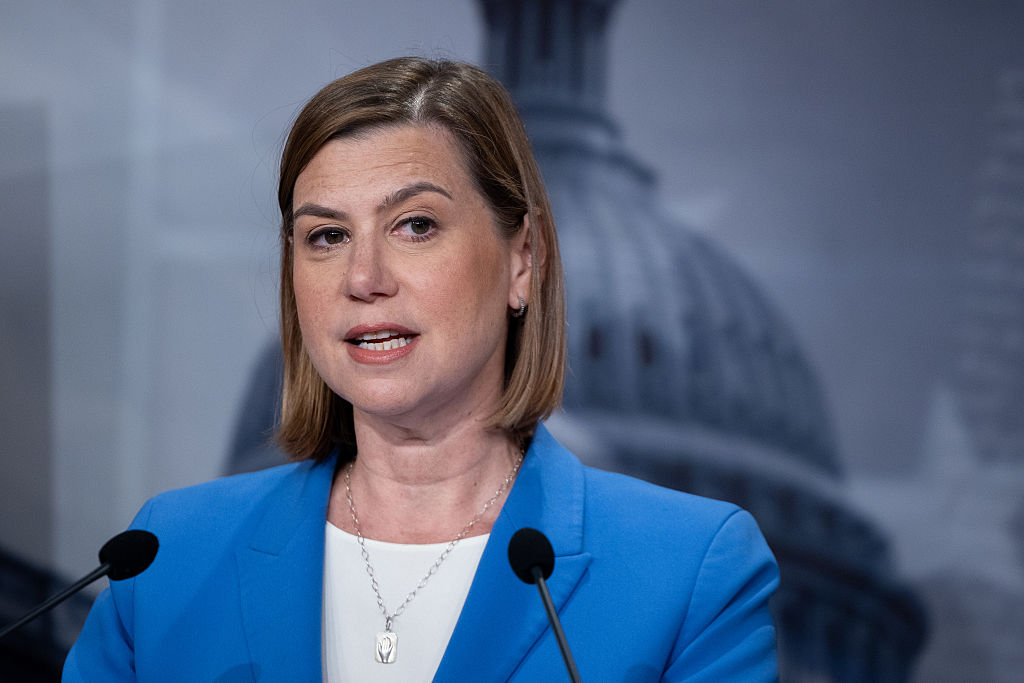
This raises some nasty questions. Exactly what information was Slotkin “analyzing” in Iraq, and how was it obtained? We know that one of the primary ways the CIA gathered “intelligence” about “Iraqi Shia militias” was by grabbing and torturing people it suspected of being militants at black site prisons like Abu Ghraib. We know, too, that only a small fraction of those people actually had anything to do with terrorism. So it’s plausible that at least some of Slotkin’s “analysis” was based on the supposed “intelligence” gleaned when you subject a random Iraqi farmer to waterboarding, stress positions, or “rectal rehydration.”
Worse, Slotkin graduated to an adviser to the Bush/Cheney administration in its last days. In that role, she might have known about some of the CIA’s abuses before the infamous “torture memos” came out in 2009. She might have had the opportunity to blow the whistle. It feels highly unlikely that we’ll ever know for sure.
The CIA and the broader “intelligence community” needs global conflict, in the same way that cops need crime, priests need sin, and the Orkin man needs termites.
Slotkin’s more recent statements about the Middle East don’t exactly inspire confidence, either. Like many liberals, she’s willing to criticize the GOP’s war-mongering, but only on tactical grounds, not basic moral principle. For instance, she has said the Bush administration “completely misread how difficult it would be to try and be the government for another country.” Similarly, she told Chotiner that Trump’s 2020 assassination of Gen. Qassem Soleimani might be unwise and provoke a “strong reaction.”

What she doesn’t say is that invading other people’s countries and killing their leaders, and then trying to “be the government,” is inherently illegitimate and criminal. But she can’t, not really, because having worked for the CIA, she’d be condemning her co-workers — and her own record of service.
We can see the same pattern play out with more recent cases of U.S. aggression. When the Trump administration attacked Iran and Venezuela earlier this year, Slotkin moved in lockstep with the majority of the Democratic Party, voting for war powers resolutions against hostilities with both countries. (This, to her credit, makes her more reliable than John Fetterman, who has voted to preserve Trump’s power to attack Iran on multiple occasions.)
But her public statements tell another story. When the Trump administration made a request for $50 billion in additional funding for the Iran war, Slotkin was open to the idea, telling Politico reporters only that “I need to know the goals and the plan. … I don’t rule anything out.” And when Trump deposed and kidnapped Nicolás Maduro, she criticized him for working with Vice President Delcy Rodríguez’s “illegitimate government” rather than following through on his promise to “[get] rid of that administration” entirely. Again, there’s no indication that waging regime-change wars is wrong in itself; only that Trump had bungled the job by not going far enough.
China, though, is Slotkin’s biggest bête noire. Like a lot of centrists who have taken the wrong lessons from the election of New York City Mayor Zohran Mamdani, Slotkin has taken to making short-form video content. She calls these videos her weekly “Intel Briefings,” and they’re skin-crawling to watch, like something you’d see on a TV in the background of a Paul Verhoeven movie.
Beating the drum for conflict with China is a constant theme. In one representative “briefing,” Slotkin tells viewers about “an issue that a lot of Michiganders know about: China and the threats that they pose.” (The “threat” turns out to be that China may buy computer chips from Nvidia, which is apparently “the equivalent of President Truman giving Russia some of our best nuclear blueprints.”) In another video, she condemns Trump for putting out a national security strategy that fails to “go hard against China.”
It’s all like this. We’re told that China has a worrying “chokehold” on the supply of “critical minerals” like lithium and cobalt; China “often undercuts our ability to sell our products,” so we need to “clamp down on what the Chinese are doing in international trade”; Chinese military technology could “make us go blind, deaf, and dumb in the first moments of a conflict,” perhaps over Taiwan; Chinese cars in particular are a “national security issue” that can’t be allowed to enter the country.
The tone is always slightly condescending: At one point, Slotkin tells us about “the leader of China, Xi Jinping,” as if we’ve never heard of the guy before. The content is pure paranoia, with a new Cold War accepted as a normal and even desirable state of affairs.

To be clear, the American people do not want conflict with China. In the most recent Pew polls from April, only 28 percent of respondents said they considered China an “enemy,” and China’s favorable ratings have been rising since 2023.
But the CIA and the broader “intelligence community” needs global conflict, in the same way that cops need crime, priests need sin, and the Orkin man needs termites. It justifies their existence, and their mammoth, ever-increasing annual budgets. So every week on YouTube, we get a former CIA agent pushing what’s good for the CIA and bad for everyone else.
More basic than any of this, though, is that the concept of “the intelligence community” is elitist to the core. Its first principle is that the American public, unwashed reprobates that we are, aren’t even qualified to know about the most important decisions being made in terms of foreign policy, let alone influence them at the ballot box. Only the “intelligence community” with its experts and analysts should do that, and always behind several layers of official secrecy. It’s a fundamentally anti-democratic notion, and it comes from a set of agencies which have overthrown a long list of democracies over the years. So there’s no reason to expect they’d respect our democratic choices at home, either. If you’re the Democratic Party, you can’t really position yourself as champions of “our democracy” and also embrace the CIA Spook Caucus as an unalloyed good.
As the maxim goes, “The purpose of a system is what it does.” To that end, the purpose of the CIA is to lie, manipulate, torture, and kill, all to preserve the existing global power structures, not to mention the agency’s own power and prestige. That’s what it does; that’s what it’s for. There’s no way anybody, anywhere should trust a former CIA officer within 100 miles of elected office. Personally, I’d vote for a Satanist or my local weed dealer before any member of the “intelligence community.” We should look at would-be Democratic politicians like Slotkin, Spanberger, and now Dunigan with the same horror as if Allen Dulles had run for Congress as a Democrat in 1965. Under no circumstances should we trust these people — and if we offer them our votes, we do so at our own peril.
The post Why Would Anyone Trust Ex-CIA Agents in Elected Office? appeared first on The Intercept.
#Trust #ExCIA #Agents #Elected #Office