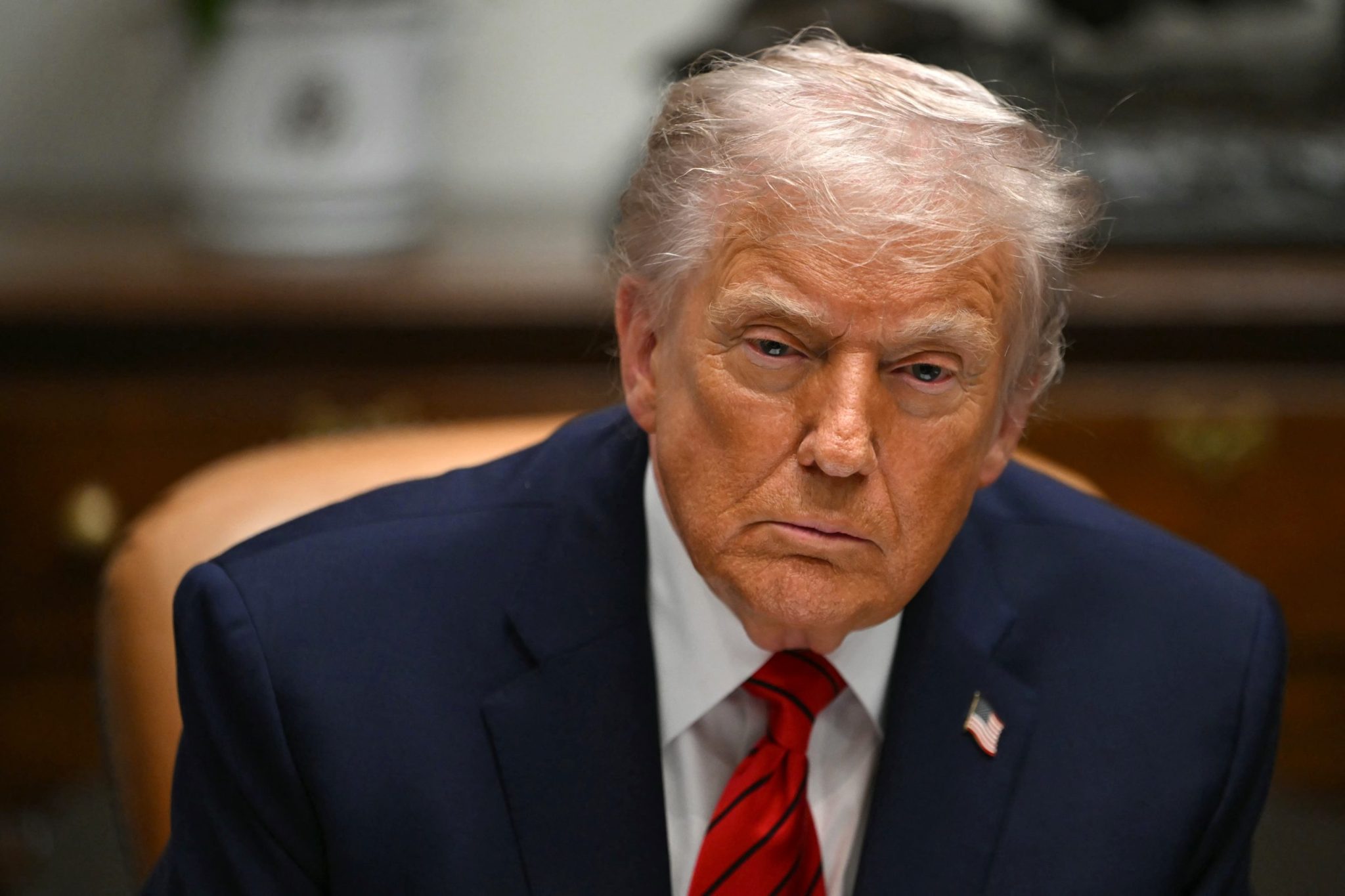
Tariff revenue fell month-over-month for the first time since President Donald Trump imposed his vast import taxes in April, fresh government data shows.
According to the Treasury Department’s monthly statement released on Wednesday, the government collected $30.75 billion in customs duties in November, down from $31.35 billion collected in October. In April, following the announcement of sweeping “Liberation Day” levies, tariff revenue catapulted to about $15.6 billion, and had been increasing every month, peaking in October.
The revenue dip follows the administration’s decision to roll back levies on grocery staples like bananas and coffee as Trump struggles to navigate the ongoing cost-of-living crisis exacerbated by tariffs. The Trump administration has also reached trade deals that have reduced duties.
In addition to lower tariff rates, import volumes have weakened, meaning there are fewer items to tax. U.S. container imports fell 7.5% year over year in October and another 7.8% in November due to waning demand for Chinese exports, according to data released this week from supply chain software company Descartes Systems Group. It followed a surge in imports earlier this year as companies tried to get ahead on shipments before duties went into place.
But as Trump contends with growing negative sentiment on how he is navigating the economy, his bid to lower tariffs to increase affordability could threaten his moonshot plans to use tariff revenue for other priorities.
Trump’s lofty tariff revenue plans
Chief among the president’s myriad proposed uses for income from the tariffs is to slash the country’s mounting national debt, which crossed the $38 trillion threshold in October. National Economic Council director Kevin Hassett, who is the frontrunner to become the new Federal Reserve chair, said earlier this month that “a lot of the revenue coming into the Treasury” is from tariffs, which has the ability to eventually ease the U.S.’s debt burden.
Trump said the volume of tariff revenue would be so high that beyond attacking the U.S.’s pile of debt, the government would be able to dole out $2,000 rebate checks to Americans.
And after announcing a $12 billion farm aid package for tariff-stricken farmers, Trump also said the bailout would be in part funded using a small portion of income from the levies.
“We’re going to be giving back refunds out of the tariffs because we’ve taken in literally trillions of dollars, and we’re going to be giving a nice dividend to the people, in addition to reducing debt,” Trump said during a December cabinet meeting. “As you know, I inherited a lot of debt, but it’s peanuts compared to the kind of numbers we’re talking about.”
Adding up the numbers
But Trump’s recent tariff retreat on some groceries, as well as on China and the European Union duties earlier this year, was a blow to his debt-slashing plans, with the Congressional Budget Office forecasting the reduction in levies eliminating about $800 billion in expected debt reduction over the next 10 years. The agency revised its projections based on the estimated tariff rate dropping from 20.5% in August to 16.5%.
Independent research also suggests Trump’s tariffs are bringing in far less revenue than the White House expected. According to a recent analysis by Pantheon Macroeconomics, the duties are bringing in about $400 billion annually, $100 billion less than what Treasury Secretary Scott Bessent predicted in August. Plummeting imports from China as companies favor routine products through less-tariffed countries like Vietnam, were a primary reason for the drop-off, Pantheon said.
Jay Shambaugh, a nonresident senior fellow at the Brookings Institute, and a professor of economics and international affairs at George Washington University, takes issue with the very idea of using tariffs to raise money.
In a commentary piece for Brookings published last month, he noted that for the U.S. to make substantive income from tariffs, the taxes would have to be economically distortive, requiring the country to spend more on industry production, which could pummel productivity. Like Pantheon, he warned inconsistent tax rates on different countries and goods could easily lead American countries to dodge tariffs by seeking out products from countries less affected by the levies.
“Trying to make this a permanent revenue stream will be costly,” he said. “It will hurt consumers. It will hurt the U.S.’ most productive firms. It will reduce economic growth. And, it will undermine U.S. relationships around the world.”
#Decreasing #tariff #revenue #threatens #Trumps #goal #income #slash #trillion #national #debt