During the 2010s, coding took the spotlight as one of the most desired skills in the job market. The coding craze spread quickly, from parents badgering their kids to drop the English major and opt for a STEM degree—and former President Barack Obama even urged people to learn to code. Obama also became the first president to write a line of code as part of the “Hour of Code”—an online event to promote Computer Science Education Week.
On the other hand, English and liberal arts majors became the subject of scrutiny, some dubbing them “barista” degrees from the belief that pursuing those majors would inevitably confine one to a job at a coffee shop, assuming such degrees have limited career prospects.
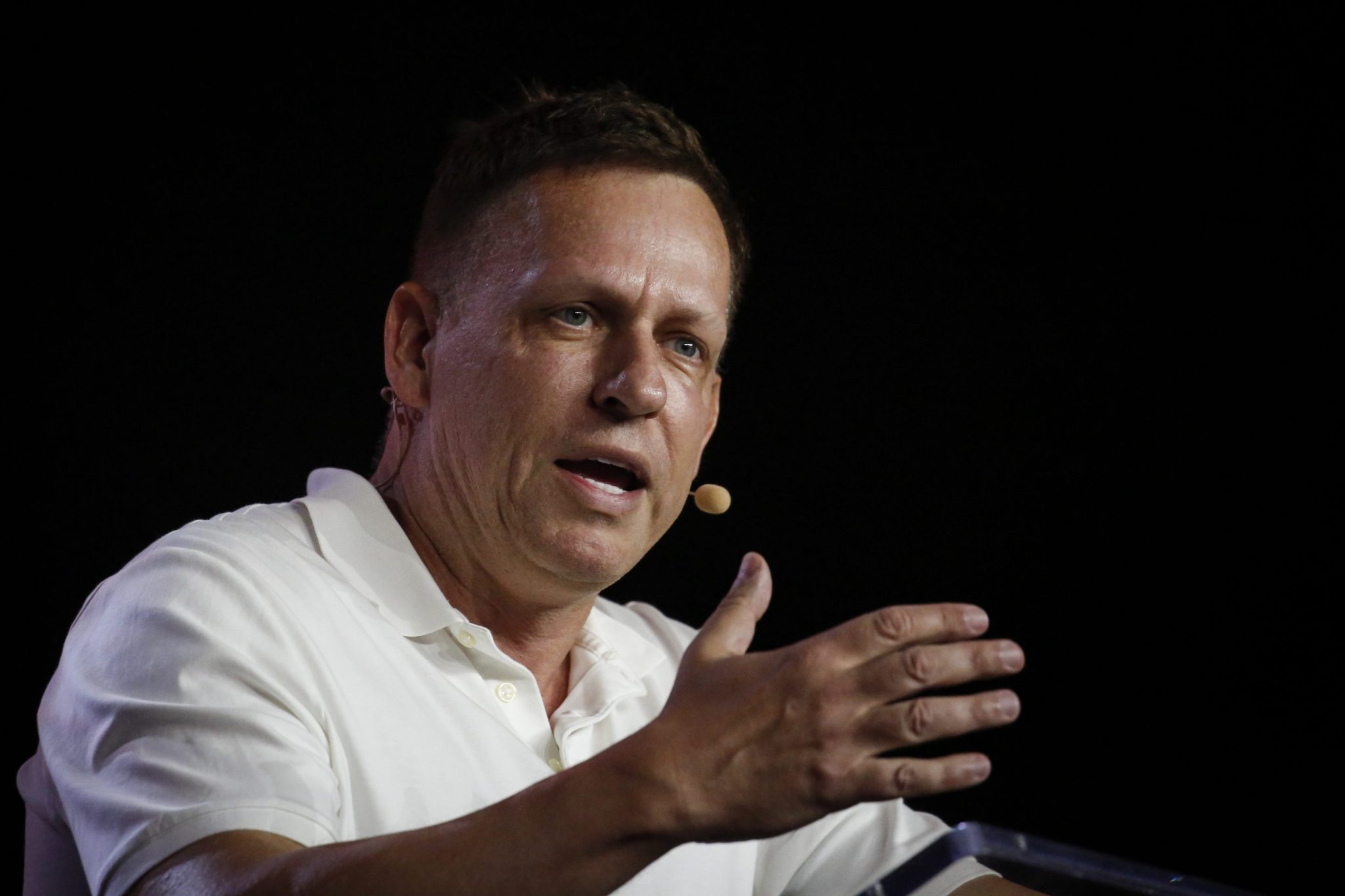
But the insurgence of AI is actually upending those assumptions. That’s at least what Palantir cofounder and billionaire Peter Thiel thinks. In a resurfaced clip from a 2024 interview with economist Tyler Cowen, Thiel said the odds are falling out of favor for STEM folks.
“It seems much worse for the math people than the word people,” he said.
Storytellers are hot on the job market
The billionaire’s comments reflect an emerging trend in today’s labor market. LinkedIn released a skills study earlier this month titled “LinkedIn Skills on the Rise 2026: The fastest-growing skills in the U.S.” that shows rising demand for communications and creative thinking skills. Communication, along with leadership and people management, are some of the most sought-after skills in today’s labor market, according to the report.
“Companies are increasingly looking for great communicators, because strong writing, clarity, and judgement still matter,” a LinkedIn spokesperson told Fortune. They noted “storytelling” has become an especially desirable skill today. “On LinkedIn, we’ve seen job postings mentioning ‘storytellers’ double over the last year.” In fact, some companies are shelling out more than $1 million for storytellers and high-level communications professionals. Anthropic, for example, is hiring for a head of communications with a $400,000 starting salary, and Netflix is offering between $656,000 and $1.2 million for a senior director of communications.
To be sure, the report does not necessarily serve as a confirmation to shred your STEM diploma. LinkedIn also found several technical skills are hot on the market, including AI prompt engineering and data annotation. These skills, though, diverge from the bread and butter of STEM degrees as they’re oriented around training AI rather than building it. While some AI prompt engineer job openings call for knowledge of programming languages—including Python and JavaScript, as well as a background in large language models—the postings also emphasize strong linguistic and creative skills to optimize AI outputs, and pay an average salary of $128,000, according to job platform Glassdoor.
As AI development advances, many leaders and AI experts predict AI will dramatically reshape the job market, and with it, the most-valued skills. With that development, some math and other STEM skills risk becoming obsolete.
Boris Cherny, the creator of Anthropic’s Claude Code, admitted he hasn’t written a single line of code since November (although he still checks the code he has AI write). Meanwhile, AI are increasingly expanding into fields occupied by STEM experts, including basic programming and data analysis.
Rumblings in the labor market
While the labor market has proven particularly dire for all recent college graduates—surpassing the unemployment rate for all workers in 2022 and hitting 5.6% in 2025—some STEM-oriented careers have an especially high unemployment rate, according to recently published data from the New York Federal Reserve. Computer engineering ranks as the major with the second-highest unemployment rate,at 7.8%, after anthropology.
But some STEM graduate unemployment rates hover below the average for all college graduates of 3.1%, including for aerospace engineering and engineering technologies majors, at 2.2% and 1.7%, respectively.
Still, during the 2024 interview, Thiel argued that even in STEM fields currently untouched by AI automation, using math skills as a bar to entry will fall out of fashion thanks to AI.
“If do you want to go to medical school, we weed people out through physics and calculus,” he said. “As a neurosurgeon, I don’t really want someone operating on my brain to be doing prime number factorizations in their head while they’re operating on my brain.”
#Peter #Thiel #warns #bigger #threat #technical #roles #creative #thinkers