Few would choose the humble showerhead when asked to name a product vital to the world’s sustainable future. Unless you are a hair salon engaged in the business of washing customers’ hair, of course. Then using 70% less water could well matter as you attempt to cut your carbon footprint. It is more efficient as well.
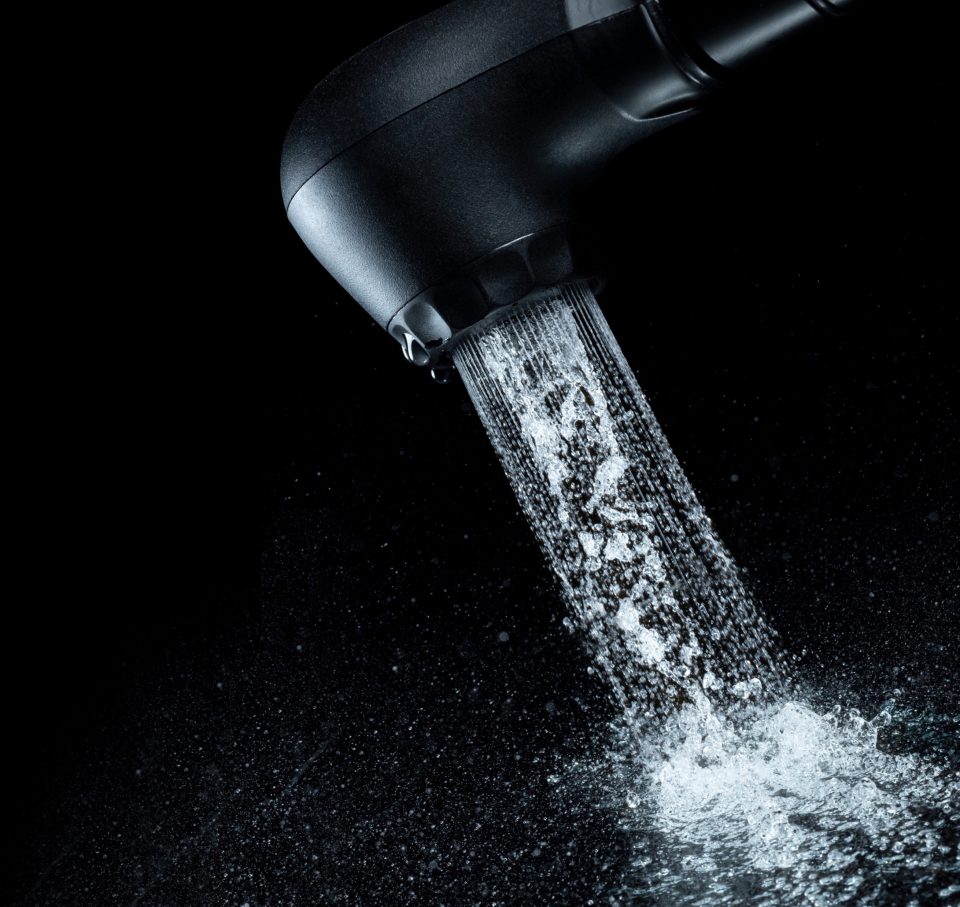
The Water Saver showerhead came from a partnership between the Swiss startup, Gjosa, and L’Oréal, the global beauty brand and Fortune 500 Europe member. At its most basic, Water Saver makes water, well, wetter—fragmenting the water streams to create droplets better suited to rinsing hair. 5,000 salons now use it across Europe.
L’Oréal
Science and engineering underpin much of what businesses do—whether that is making concrete or lipstick. Ten years ago, during the sustainability gold rush, you could not move for clever company professors proffering solutions to sustainable packaging and non-fossil fuel energy. Then came COVID, the return of inflation, and Donald Trump brandishing lurid allegations that the climate agenda was nothing but a “green scam”. Many companies pivoted away from trumpeting environmental policies as a result.
But sustainability is not just for Christmas. Politically, the atmospherics have changed but the essential nature of the challenge—living well on our planet for the next hundred generations—has not.
85
L’Oréal’s rank on Fortune 500 Europe
Consumers, however, do need a different message. For too long, action on climate was wrapped up in the language of virtuousness and morality. Both may be useful, but consumers are frankly more concerned with dollars and cents. L’Oréal calls this ‘dual excellence’ sustainability, bringing together climate and economics. Producing sustainable products can be cheaper at scale, boost consumer engagement (new products are exciting) and improve financial bottom lines. Others know it as the ‘double bottom line’, encompassing both planet and profit.
“We’re going to pursue superior financial results and also exceptional social and environmental impact,” Ezgi Barcenas, chief corporate responsibility officer for L’Oréal, tells me.
“It’s a business model. You are not only offering the consumer the choice of a product with a lower environmental footprint, but also an accessible price point, and it’s a way for us to attract new consumers, not only creating loyalty, but also attracting new consumers into the category, right? So, it is solving for the environmental, social, and economic dimensions of sustainability.”
Earlier this year, L’Oréal announced the next stage of its €100m ($120m) partnership with Cambridge University’s Institute for Sustainability Leadership. Thirteen firms have been chosen to collaborate on sustainability projects.
Packaging is one of the most convoluted challenges. L’Oréal has set its own ambitious target of making 100 % of its plastic packaging reusable, refillable, recyclable or compostable. Via various partnerships, they are now exploring making sugarcane materials heat resistant, using plant fibers rather than plastic to make lids, and exploring packaging constructed from seaweed which grows without the need for fresh water, land or fertilizers.
“The idea behind it is to really go after those solutions that are market-ready, so that we can quickly pilot and test them and then bring them to scale depending on the solutions and the results that we get,” Barcenas said.
“[The companies] are solving for the same shared challenges that we collectively face today, and they are very resourceful and thoughtful in their own unique ways. We can send clear demand signals to the innovation ecosystems around the world so that, year over year, we can articulate what we’re looking for and we can inform those innovation pipelines as well.”
Read more: The CEO of Capgemini has a warning: You might be thinking about AI all wrong
This is not early-stage work, but what is known as point “TRL 7-9? on the product development map, a “technology readiness level” that is almost at the point of in-market commercialization.
“The idea behind it is to really go after those solutions that are market-ready, so that we can quickly pilot and test them and then bring them to scale depending on the solutions and the results that we get”
Ezgi Barcenas, chief corporate responsibility officer for L’Oréal
“We’re really excited about this process of offering our partners mentorship, access to our internal teams, access to external experts and partners as well, and then ultimately turning this into a successful pilot to bring these solutions to scale,” Barcenas said.
The chemist, Eugene Schueller, founded L’Oréal in 1909 with a new type of hair dye that was kinder to hair. Consumers now want more than good-looking locks. Whatever the politicians say, many want to be kinder to the planet as well. As long as it is at the right price.
#Trump #brand #green #scams #companies #LOréal #quietly #pouring #millions #sustainability