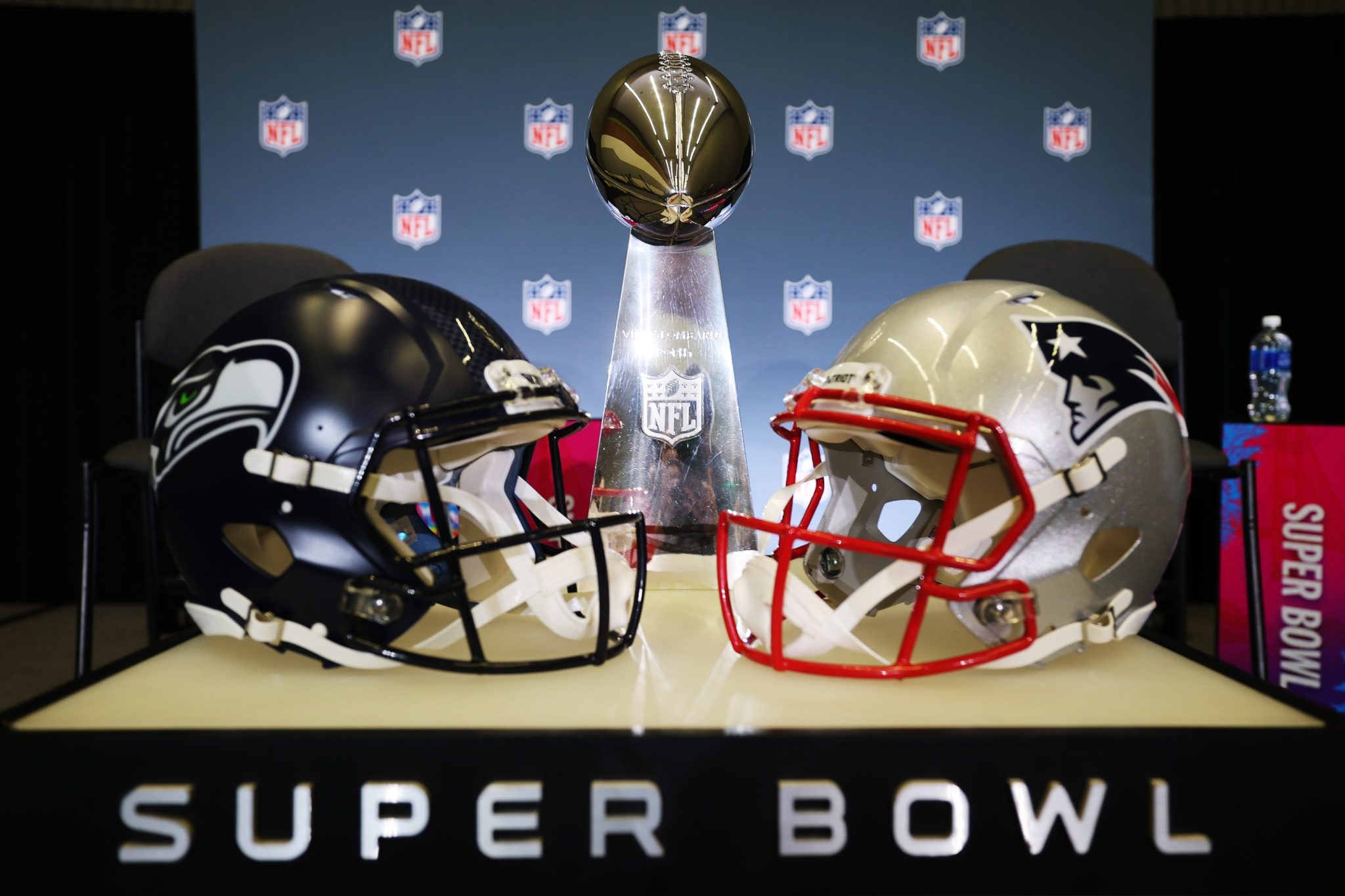
This year’s Super Bowl pits two low-wattage teams in a rematch from 11 years ago. It won’t come as a shock if this year’s broadcast, on NBC, sees a drop from last year’s record ratings.
The good news for all involved: Last year’s game attracted nearly 128 million TV viewers, the most-watched program in US history. No other telecast garnered even half that audience in 2025. Anything less than a catastrophic drop would likely mean this year’s Super Bowl still draws twice the audience of any other live US television program in 2026.
What is it about the National Football League’s championship that allows it to defy gravity and remain the one piece of American television that everyone watches? In a word, it’s scarcity. The NFL has perfected the art of giving people what they want — but not too much of it. And there are three distinct audiences that turn on the big game to get something they can’t get anywhere else on TV.
The primary audience is, of course, a nation’s worth of football fanatics: 83 of the top 100 US broadcasts in 2025 were NFL games, according to Nielsen. In a 2025 survey by S&P Global Market Intelligence asking US fans of different sports whether they identified as casual or avid fans, the NFL was the only league where more than half the respondents (55%) who said they watched the sport labeled themselves avid.
And a good portion of those fans love to bet on the game. They’re expected to place a record $1.76 billion in legal wagers on Sunday’s event, according to the American Gaming Association. Traders on prediction markets Kalshi and Polymarket have swapped over $800 million in Super Bowl-related contracts.
This year’s matchup of the Seattle Seahawks and New England Patriots doesn’t have the usual superstars of the recent past — no Tom Brady, Patrick Mahomes, Rob Gronkowski or Travis Kelce. Neither of the quarterbacks running the show at Levi’s Stadium in Santa Clara, California — Seattle’s Sam Darnold or New England’s Drake Maye — will likely host Saturday Night Live anytime soon.
Yet Sunday will be the closest thing the US has to a sports national holiday. (The game kicks off at 6:30 p.m. US East Coast time.)
The NFL builds demand in the regular season, playing 272 games a year. The NBA plays 1,230 total, while each Major League Baseball team plays 162.
Other sports leagues also ask their fans to commit to two months’ worth of seven-game series for their respective playoffs. The NFL counters with 13 total postseason games over five weeks. Unlike its pro US competitors, football is winner-take-all in every single playoff matchup up to the Super Bowl.
But football fans alone can’t explain the Super Bowl’s success. As it soared past baseball and basketball to become America’s favorite league, the NFL hit on a key ingredient to take it beyond a sporting event. It made halftime, ostensibly the least interesting part of the event as teams retreat to rest in the locker room, potentially the most entertaining. Once a home for safe but boring bets like college marching bands, halftime went in a new direction in 1993. That year, while the Dallas Cowboys were busy blowing out the Buffalo Bills, Michael Jackson performed a medley of hits.
By the late 2000s, A-list acts like Bruce Springsteen who could sell out a football stadium themselves became the norm, and the viewership kept climbing. The 1996 Super Bowl, between the Cowboys and the Pittsburgh Steelers, attracted 94 million viewers, then a record for the event. Every game since 2008 has topped that number.
And the halftime show has continued to evolve as the Super Bowl’s viewership has climbed. The NFL doesn’t share its budget numbers for the show, but it isn’t cheap: Reuters reported that the 2020 show, featuring Jennifer Lopez and Shakira and lasting 13 minutes, cost $13 million. Scarcity is at work here, too. Viewers can’t get a live television spectacle of this size anywhere else.
Super Bowl performers now expect a huge bump from their appearances. Last year, Kendrick Lamar saw a 175% increase in streams on Spotify after playing the show. The year before, Usher surged 550%. And Rihanna before him saw a 640% jump.
At least as many viewers will tune in this Sunday to see what producer Roc Nation comes up with for the 2026 performers, Bad Bunny and Green Day — and what political statement either might make on live television. Neither has shied away from criticism of President Donald Trump.
Finally, the weekend should also bring in an audience that might not care for either football or music. Every Super Bowl contains roughly 50 minutes of advertising time — the most valuable 50 minutes on television. Advertisers treat the game like their own championship, waiting all year to unveil the most expensive, star-studded ads made for this night.
NBC had sold 90% of its Super Bowl ad inventory before the season even began. The average price: $8 million, with some paying as much as $10 million.
These commercials have long been a draw. Apple Music is now the Super Bowl halftime show’s presenting sponsor. Apple took aim at IBM in a 1984 ad that made the release of its Macintosh computer a cultural event.
There are countless viewers who can’t name a player on either team but want to see what products well-known brands will try to sell them. Especially as it’s more common these days for the biggest entertainment stars to participate: This year, Bradley Cooper, Ben Affleck and George Clooney are among the celebs featured in commercials.
Before the Super Bowl dominated the all-time most-watched lists, it spent years trying to unseat the final episode of M*A*S*H, which nearly 106 million viewers watched in 1983. The league finally topped that number with the 2010 Super Bowl, when New Orleans beat Indianapolis.
History teaches us in sports and beyond that no dynasty lasts forever. But in this era of splintered audiences pondering endless options, it’s hard to imagine what might unseat the big game anytime soon.
#Super #Bowl #scarcity #superpower