The controversial but highly successful revenue enhancement project in the Nama Khoi Local Municipality, based in Springbok in the Northern Cape, will be the subject of a high court hearing in Kimberley on Thursday, as the municipality’s “development partner” insists on being paid for its efforts.
Rural Maintenance also accuses the municipality of using the financial gains generated over the eight months to the end of October, set at R76 million, for salaries and other operational expenses, contrary to the terms of the contract.
Read:
Treasury responds to Springbok bullying claim
Treasury accused of bullying successful Springbok power partnership
The use of the funds is, according to Mayor Rodney Kritzinger, the only remaining dispute.
The municipality acknowledges the good work Rural Maintenance is doing and is prepared to pay it the R11.7 million invoiced so far.
It has not done so due to a directive from National Treasury stating that such payments will be classified irregular and may result in the withholding of essential government grants, as well as potential criminal charges against the officials and politicians responsible.
Kritzinger says Nama Khoi hopes to get some guidance from the court that will allow it to proceed with the payments to Rural Maintenance.
Agreement
Moneyweb previously reported that Nama Khoi and Rural Maintenance entered into a 15-year agreement in November last year, which came into effect from February. The company was appointed as the municipality’s development partner to reduce costs and enhance revenue in its water and electricity services.
Read:
Sputla’s flagship municipal power project falters
Third-party concessions a solution for municipal electricity distribution
Grand plan to resolve municipal debt to Eskom ‘flawed’ and ‘unrealistic’
An independent expert determined a revenue baseline based on historic numbers, and the parties agreed that Rural would only be paid from any additional revenue realised, referred to as the “positive delta”.
If there were no additional funds, it would simply not be paid at all.
ADVERTISEMENT
CONTINUE READING BELOW
Chris Bosch, CEO of Rural Maintenance, explains in an affidavit to the court that it was really a “rescue mission” due to the state of the infrastructure, among other things.
Up to the end of September, the company invested R47 million of its own money to upgrade the system, which resulted in the R76 million benefit.
This money was supposed to be ring-fenced in a separate bank account and utilised firstly to pay Rural Maintenance.
Next, it would be used to improve the water and electricity services, and only thereafter to enhance the municipality’s capacity.
The company has, however, not received a single cent to date.
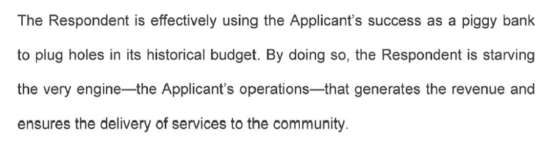
It accuses the municipality of transferring the money to its main bank account without the company’s required co-authorisation and using it for salaries and other operational expenses, contrary to the terms of the contract.
In the meantime, it expects Rural Maintenance to supply it with spares and equipment for the water and electricity services.
According to Kritzinger, the money owed to Rural has been ring-fenced.
However, the municipality disputes the need to ring-fence the entire positive delta.
It will seek the court’s guidance in this regard.
Additional work
ADVERTISEMENT:
CONTINUE READING BELOW
Bosch says that after pleas from the municipality, Rural Maintenance has become involved in other municipal services and systems, which are beyond the scope of the contract.
While the company cannot bill the municipality for these additional services, it has proceeded with them to prevent the collapse of essential services.
It is however a family business that cannot afford to carry a debtors’ book of almost R12 million. He says:
Source: Chris Bosch affidavit on behalf of Rural Maintenance
Bosch says the contract stipulates that the equipment remains the property of Rural Maintenance until the end of the 15 years, after which it is transferred to the municipality at no further cost.
Rural is asking for the court’s intervention to prevent a situation where it will be forced to not only pursue monetary compensation but also to remove all the infrastructure it has installed.
This, he says, will be catastrophic for the municipality and the communities it must serve.
Consequences if the contract is cancelled
Bosch warns that if Rural Maintenance is forced to withdraw, the following will happen immediately:
- The post-paid billing system will go offline, which means the municipality won’t be able to collect post-paid consumer debts.
- The prepaid water and electricity vending system will go offline, meaning consumers won’t be able to buy vouchers and reload units., leaving them with dry taps and in the dark.
- The fault-reporting system will go offline.
- The metering system and customer information portal will go offline.
- There will be no staff left with the required legal competency to, among others, operate all the electrical infrastructure.
- The municipality won’t be able to keep the bulk accounts from Eskom and Vaal Central Water up to date.
Nama Khoi has not yet filed any papers in the matter.
Read:
Controllers of the national purse support Eskom’s municipal debt plan
Salga red-flags Eskom’s ‘backdoor takeover’ of municipal distribution
Eskom’s municipal debt solution a ‘takeover by stealth’?
Follow Moneyweb’s in-depth finance and business news on WhatsApp here.
#piggy #bank #Rural #Maintenance