Joshua Nevett,Political reporterand
Kate Whannel,Political reporter

 PA Media
Ground rents paid by leaseholders are to be capped at £250 a year in England and Wales, as part of UK government plans to make major changes to home ownership.
The reforms also include proposals to ban the sale of new leasehold flats and give homeowners greater control over how their buildings are managed.
Campaigners feared the government could drop the cap on ground rents – an annual fee leaseholders must pay to their freeholder – because of the potential impact on pension funds.
But Labour MPs, including former Housing Secretary Angela Rayner, had urged the government to stick to Labour’s manifesto promise to tackle “unregulated and unaffordable ground rent charges”.
The reforms will be published in a draft Leasehold and Commonhold Reform Bill, which will be introduced on Tuesday.
Announcing the cap in a TikTok video, Prime Minister Sir Keir Starmer said the move would save some leaseholders “hundreds of pounds”.
“That’s really important because the cost of living is the single most important thing across the country,” he said.
Labour’s 2024 election manifesto promised to “finally bring the feudal leasehold system to an end”.
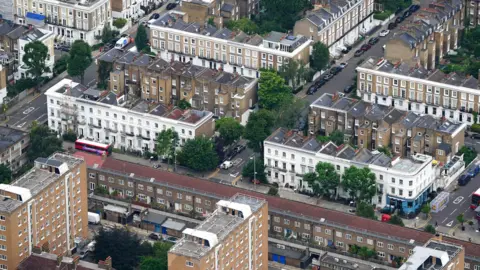
There are around five million leasehold homes in England and Wales, where people own the right to occupy a property via a lease for a limited number of years from a freeholder.
Ground rents were abolished for most new residential leasehold properties in England and Wales in 2022, but remained for existing leasehold homes.
It is common for a lease to include a clause that the ground rent doubles or increases by RPI inflation at fixed intervals, which can make it difficult to sell or get a mortgage for a property.
The Labour government says under its reforms, ground rent will ultimately be reduced to a peppercorn, effectively zero, after 40 years.
Forfeiture, whereby leaseholders can lose their home and the equity they built up if they default on a debt as low as £350, will be abolished.
The bill will also make it easier for existing leaseholders to convert to commonhold, which means occupants jointly own the ground a flat is built on as well as the building, without an expiring lease.
The bill will now be scrutinised by MPs on the Housing Committee before making its way through Parliament, with the government saying the cap could come into force in late 2028.
Treasury sources had previously acknowledged there were difficulties over where to draw the line over annual ground rent charges.
Housing Secretary Steve Reed said the government’s reforms struck the right balance in a way that “protects people’s pensions but also protects leaseholders from unreasonable increases”.
“Up to five million leaseholders will now know they never have to pay more than £250 and over time it will reduce to zero,” he told BBC Breakfast
The Residential Freehold Association (RFA), which is the trade body representing professional freeholders, said capping ground rent was “wholly unjustified” and warned over the impact on the UK’s reputation for investors.
An RFA spokesperson said the bill “will tear up long-established contracts and property rights, which are pillars of the UK’s investment reputation”.
Campaigners had called for a cap, saying that escalating ground rents had left leaseholders struggling to sell their homes.
However, some had wanted the government to go further and limit ground rent to a peppercorn rate – effectively zero.
Leaseholds is the default tenure for privately-owned flats, and the Land Registry estimates that 99% of flat sales in 2024 in England were leasehold.
The English Housing Survey has estimated that in 2023/24, leasehold owner-occupiers reported paying an average annual ground rent of £304 a year.
In 2024, when Labour were in opposition, the current Housing Minister Matthew Pennycook said his preference was for ground rents to be capped at effectively zero.
Writing in the Guardian earlier this month, Rayner said ministers were “subjected to furious lobbying from wealthy investors” trying to water down the commitment and warned people may lose faith if the party could not fix the “obvious injustice” with a cap.
And last week, former Labour minister Justin Madders told the BBC that the prime minister could face a “mass rebellion” if the government abandoned its pledge to cap ground rents.
He said setting the limit at a peppercorn rate would be his preferred choice but that he could accept a £250 cap due to the “risk of elongated legal challenge”.

Get our flagship newsletter with all the headlines you need to start the day. Sign up here.
#Ground #rents #capped #year #leaseholders