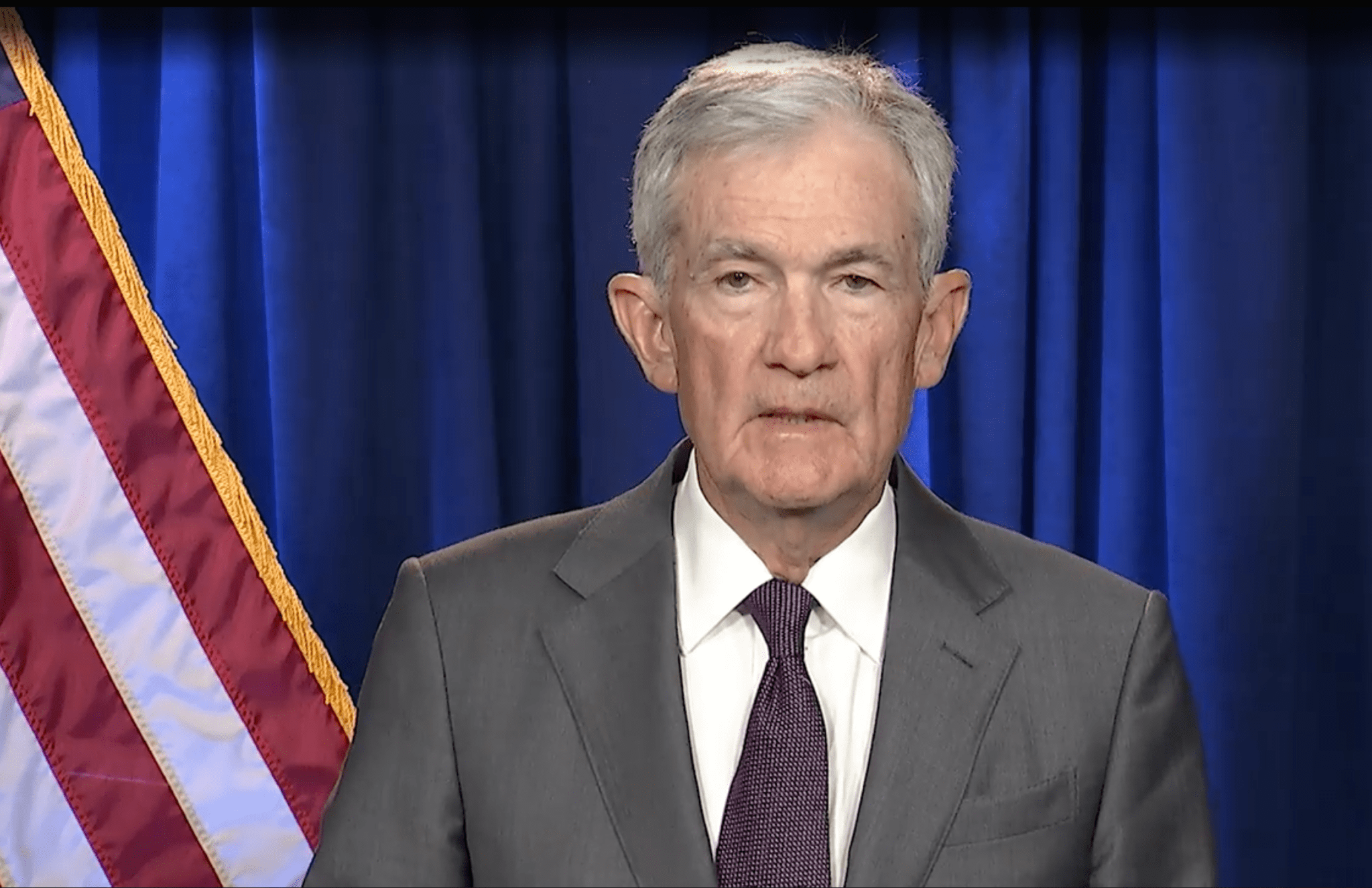
Whoever replaces Jerome Powell as chairman of the U.S. Federal Reserve in May knows one thing: If they don’t do what President Trump wants, they risk being criminally prosecuted. That was the unambiguous message in Powell’s extraordinary statement yesterday, in which he vowed to continue to set monetary policy independently regardless of the federal grand jury subpoenas investigating his statements to Congress about alleged cost overruns in the renovation of the Fed’s HQ building.
“This new threat is not about my testimony last June or about the renovation of the Federal Reserve buildings. … Those are pretexts. The threat of criminal charges is a consequence of the Federal Reserve setting interest rates based on our best assessment of what will serve the public, rather than following the preferences of the President,” he said.
“This is about whether the Fed will be able to continue to set interest rates based on evidence and economic conditions—or whether instead monetary policy will be directed by political pressure or intimidation.”
Markets moved back into “Sell America” mode overnight as traders digested the prospect of an incoming Fed chair who lacks independent credibility: The dollar sank 0.32% against a basket of international currencies; the yield on 5-year Treasuries moved sharply up, a sign that investors now regard U.S. government bonds as being suddenly more risky; gold futures—the traditional safe haven—rose 2.21% today to hit a new record high over $4,600 per troy ounce; and S&P 500 futures are down 0.66% this morning prior to the opening bell.
Wall Street analysts are almost universally negative about the news.
“The combined drop in the dollar, equities and Treasuries was a reminiscence of the ‘sell America’ days of last spring,” ING’s Francesco Pesole told clients this morning. “The downside risks for the dollar from any indications of further determination to interfere with the Fed’s independence are substantial. Again, the bond market will be the most important barometer, both on the short end of the curve if markets price back in more rate cuts, or in the long end with potential stress signs on independence risks. A sharp steepening of the curve could take the dollar on a fall.”
At Invesco Asset Management, analyst David Chao told Bloomberg, “The Fed subpoena is another example of how US assets are becoming less attractive … Not only is the US retrenching behind its Fortress America borders, the country is also becoming more predatory.”
The subpoenas may also trigger a burst of inflation, according to RBC Capital Markets’ Blake Gwinn. “Markets will start to price in greater inflation expectations, inflation risk premium, and term premium if the Fed’s independence comes under further attack,” he told the Financial Times. “We don’t appear to have hit it yet, but every action is another step closer to it.”
Counterintuitively, some analysts think that the investigation now makes near-term interest rate cuts less likely, because Powell and the other members of the Federal Open Markets Committee will be determined to show the markets that they are guided by the data and not legal threats.
“The move may also help Fed independence,” UBS’s Paul Donovan said in an email. “Powell’s defiance might signal a reluctance to quit as a Fed governor this year. There are signs the Senate may delay confirming the nomination of a new Fed Chair. Concerns about market reactions and perceptions of institutional independence (in the wake of legal challenges) may become hawkish considerations in setting interest rates.”
ING’s Pesole said, “Markets aren’t ready to price in a loss of Fed independence just yet, either on the view that Powell will indeed remain firm in his policy views (as he’s pledged to), the FOMC won’t be heavily affected, or that the DoJ subpoenas aren’t likely to lead to an indictment.”
Either way, there’s a real sense of uncertainty among asset managers right now. “The Fed as we have understood it as an institution over the past couple of decades is fading from view. It’s operating in a different environment,” ANZ’s chief economist, Richard Yetsenga, told the FT.
Here’s a snapshot of the markets ahead of the opening bell in New York this morning:
- S&P 500 futures were down 0.66% this morning. The last session closed up 0.65%.
- STOXX Europe 600 was down 0.1% in early trading.
- The U.K.’s FTSE 100 was flat in early trading.
- Japan’s Nikkei 225 was closed today.
- China’s CSI 300 was up 0.65%.
- The South Korea KOSPI was up 0.84%.
- India’s NIFTY 50 was up 0.42%
- Bitcoin was at $90.4K.
#Arrow #Button #Icon