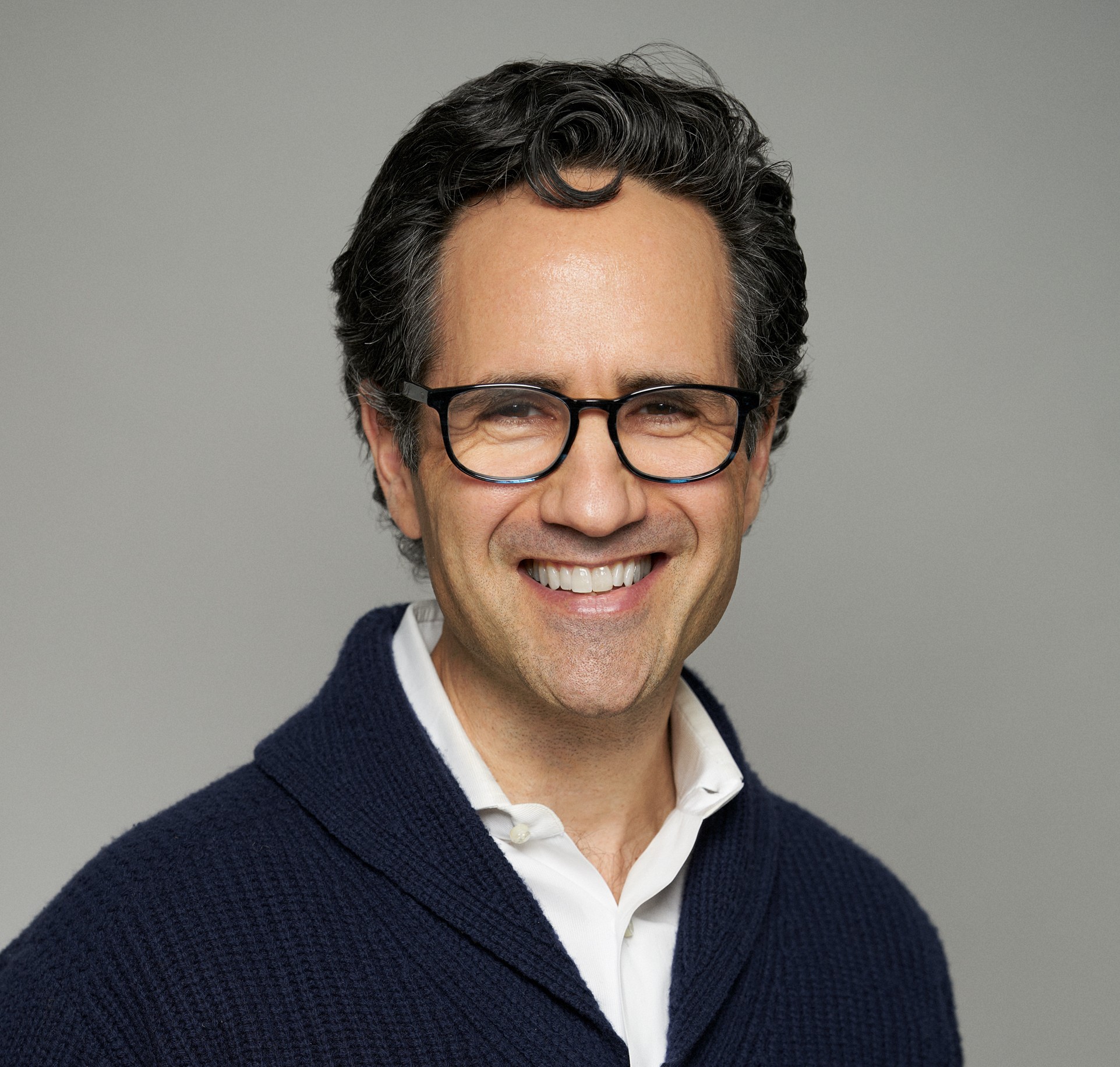
Netflix’s potential acquisition of Warner Bros. represents more than just a consolidation of media giants; it is a strategic retreat from a lost battle and a fortification against a terrifying new one. According to Doug Shapiro, an independent consultant and senior advisor at Boston Consulting Group with nearly 30 years of media industry experience, the move signals that the streaming leader is admitting defeat in its famous “war on sleep” and scrambling to survive the “infinite monkey theorem” of the AI era.
Shapiro’s widely read Substack, The Mediator, reflects years of analysis and experience from his long career, including a stint at WarnerMedia, where he served on the Executive Committee and headed the Corporate and Data Strategy functions. For much of 2025, months before Paramount sparked a bidding war for Warner, or Netflix emerged as the preferred acquirer, Shapiro has been writing about the end of the last wave of media disruption—distribution, dominated by Netflix—and the beginning of the next: infinite content. His collected thoughts on infinite content will appear soon in a book by the same name, being collected on Substack, but he spoke to Fortune in the wake of Warner reaffirming its preference for the Netflix deal in the first week of January, unpacking more of his thoughts on what he’s called “one battle after another” in the media disruption space.
Shapiro told Fortune that we shouldn’t overlook just how significant it is “that Netflix is even doing this,” noting that it’s very “out of character” for a company that has historically avoided large acquisitions. In general, he added, big acquisition attempts, especially ones that are out of character, “are always telling us something.” He said the deal is a powerful signal that Netflix believes the media landscape has fundamentally shifted and that the strategies that built its empire are no longer sufficient to defend it. Hence the infinite monkeys.
Losing the time battle
Netflix co-founder Reed Hastings once infamously said that Netflix’s primary competitor wasn’t Hollywood or even linear TV—it was sleep itself. With “binge-watching” still a relatively new phenomenon when Hastings made his remarks in 2017, he explained, “You get a show or a movie you’re really dying to watch, and you end up staying up late at night, so we actually compete with sleep.”
From the vantage point of 2025, Shapiro contends, Netflix’s $72 billion bid for Warner is a tacit admission that the battle on sleep was one thing, but the battle against social media and all the other distractions of the super-plugged-in-world are another. “Traditional media cannot win the time game,” he said, with the battle for consumer attention being lost to social platforms like YouTube, Roblox, and TikTok, he argued, where consumption has become “reflexive” rather than deliberate.
Shapiro explained that these platforms “hack our biology” with dopamine loops, making consumption “mindless and habitual” while also making consumption reflexive. By contrast, Netflix requires a deliberate choice—sitting down, selecting a title, committing to a narrative—it cannot compete with the sheer volume of low-friction content on phones. Instead, he argued that they have to pivot from a model based on broad time-share to one based on deep engagement and higher willingness to pay.
Shapiro explained his allusion to a plethora of primates by citing the famous “infinite monkey theorem,” which argues that it’s possible that an infinite number of monkeys could recreate, with an infinite number of typewriters, the collective works of William Shakespeare. Saying that it’s “really a commentary about infinity more so than about Shakespeare,” he said this absurd idea really gets to what Netflix is grappling with when it comes to user-generated content with new AI tools. “That’s what you’re starting to deal with, practically speaking, is an infinite number of creators empowered by AI. You don’t need them to all make something good. You only need a tiny, tiny, tiny percentage of them to make anything decent for that to really compete for time.”
Instead of monkeys with typewriters, Shapiro offered another stark metaphor from Game of Thrones to describe the threat of AI-enabled user-generated content to all the entertainment companies that make content with actors on sets, standing in front of cameras: “There’s an army of the dead amassed at the wall.”
This disruption is happening from the bottom up, Shapiro argued, citing kids and unscripted content, which are dominated by YouTube now, with creators like Mr. Beast emerging. The next wave will be scripted drama and comedy, he predicted, powered by AI tools that lower the barrier to entry. He sees the risk for Netflix long-term being that consumers resist paying a monthly subscription fee when so much content is free, and consumers’ definition of quality shifts away from high production values. “How do they ensure that people are still gonna be willing to pay $25 … $30 a month, when there’s just such a vast amount of free content?”
Netflix’s last three years of sudden pivots show how seriously it’s taking this challenge, as its stock crashed in 2022 following the first slowdown in subscriber numbers in more than a decade, after which it piled into advertising and sports after long saying it wouldn’t—it also juiced revenue by cracking down on its famously lax attitude to password sharing. The company said in 2024 that it would stop disclosing subscriber numbers as part of its quarterly earnings. Its churn—or subscribers leaving the business—has been the envy of the industry for years, and yet in terms of both streaming and linear TV time, it currently trails YouTube, even after the close of a potential Warner acquisition.
Netflix cemented its position as the largest streamer in the world by number of subscribers after recovering from its 2022 stock wobble, with its last reported subscriber number crossing 300 million in the first quarter of 2025. Its SEC filings show that it still overwhelmingly generates revenue from streaming subscriptions (including its ad tier), with no separate reported line for consumer products, theatrical, or significant third?party TV licensing. Warner Bros. Discovery’s Distributions segment, on the other hand, was its largest revenue generator in 2024—that’s the declining linear TV business of “fees charged to network distributors,” a segment that is notably not included in the Netflix deal. But Netflix would be acquiring what the industry considers the “crown jewel” of Warner IP, with DC superheroes, Harry Potter/Wizarding World, Lord of the Rings (based on the books, not the appendices, as those rights belong to Amazon/MGM), and HBO franchises including Game of Thrones and The Last of Us.
The fortress of intellectual property
This is why the Warner bid is essential, Shapiro said, repeating one of his recent theories about the coming wave of disruption in media. He outlined a three-part framework for why established intellectual property (IP) is the only viable defense in this new reality: IP as a filter, IP as a moat, and IP as a platform.
First, IP is a filter. As content becomes infinite, the “search costs and the opportunity costs” for consumers skyrocket. People become paralyzed by choice and the risk of wasting time on something bad. Consequently, “people fall back on stuff they already know,” because known quantities are safer bets with built-in communities.
Second, IP is a moat. Shapiro argues that “you can’t really make new IP anymore,” or at least, it has become incredibly difficult. He points out that despite producing roughly 1,000 original projects, the number of true franchises Netflix has created can be counted on one hand—citing Stranger Things as a rare success, while noting they don’t even fully own Wednesday. Netflix co-CEO Ted Sarandos himself alluded to this on the conference call announcing the Warner bid, saying that it will offer “new IP universes for us … They’ve got 100 years of creative development experience. We’ve been at it for a little over a decade.”
According to Shapiro, the IP stagnation is industry-wide, far beyond Netflix. Shapiro highlights that among the top 50 animated films of all time, very few are from franchises created in the last decade. Similarly, in gaming, the top titles remain largely the same year after year—usually Call of Duty or Madden. While saying it’s not “impossible,” Shapiro said he thinks it’s getting harder and harder to make compelling new franchises, harking back to his earlier point about the war on sleep being lost. “For consumers, their willingness to sample anything is a function of the search costs and the opportunity costs.” In other words, the ability to find something that you like by yourself is diminishing. “Like right now, I don’t really watch a show unless three people tell me to … There’s just so much stuff out there.” By acquiring Warner, he added, Netflix isn’t just buying movies; they are buying a moat made of Friends, Harry Potter, and Batman.
In a separate interview, S&P Global’s Melissa Otto, head of visible alpha research, agreed in an interview that AI is “at the heart” of the deal, with Netflix and other bidders jockeying to own video “corpus” at scale so they can train and deploy next?generation models on top of it.
Third, Shapiro said, IP is a platform. In the future, he predicted, media companies must operate like video games, running “live ops” where content is a service rather than a product. It has to learn how to “monetize fandom.”
Shapiro pointed to Hybe, the agency behind BTS, which directs fans to its own engagement platform, Weverse, something Hollywood missed out on. “In the West, all these media companies completely ceded all of that fan engagement, it’s all ceded to Reddit and Twitter” and other social networks. “It all happens to some other platform, they don’t control that.” Shapiro argued that Netflix needs Warner’s IP to create similar ecosystems where fans can engage continuously, perhaps even using AI to create their own content within those universes.
Otto similarly framed YouTube as “just a stage”: for many creators, all that matters is a platform that can get them an audience, raising questions about what legacy studios are even useful for, when distribution has been radically democratized. She went further, noting that she used to play Dungeons & Dragons, the role-playing game from the 1980s made famous for a new generation by, ironically, the Netflix hit Stranger Things.
In D&D, players start with a prefab character and world, but the thrill comes from the “free will to creatively add something,” a style of participatory storytelling that changed board games forever and ultimately led to MMORPGs (Massively Multiplayer Online Role-Playing Games) such as Fortnite, where a D&D mentality merged with video gaming to create an immersive world. If movies, shows, and franchises enabled a “similar type of interactive capability,” she said, entertainment could be entering a new era. She added that the technology and infrastructure currently being built “could facilitate that in a monetizable way.” In fact, she pointed out that OpenAI has been openly saying that AI-generated video is monetizable, with characters and IP in particular a potentially significant opportunity in the space.
Shapiro cited another recent piece of his, in which he wondered why Disney+ is a distribution platform, not a fan engagement platform for everything Disney. The recent $1 billion licensing deal with OpenAI shows “they’re taking baby steps in that direction,” he said, agreeing that the Netflix House initiative shows that Netflix is also tentatively moving toward making its IP something that fans can engage with more tangibly. “A big part of it is, really, all these media companies have to reorient their focus to: how do we superserve our fans?”
The analyst repeated one of his current theories. “The past of media is about reaching as many people as possible, and the future is about selling more stuff to fewer people. Because traditional media cannot win the time game. The time battle is lost.” He mentioned Disney’s franchises as an example of the successes—and stresses—of managing IP. Entertainment companies “have to start thinking about media as a service, not as a product, because the idea that you’re gonna put out a Star Wars movie every five years and try to restart the engine of cultural awareness and all that sort of stuff … I think that’s not going to cut it anymore. You’re gonna need to have a way for people to engage on a continuous basis.”
The cultural paradox: “Slop” vs. engagement
However, Shapiro acknowledged that the transition to an AI-saturated future is not straightforward. There is a profound cultural tension regarding the adoption of these technologies, best illustrated by the generational divide he observes in his own home.
Shapiro noted that his 23-year-old daughter, who lives in Brooklyn, may be in the prime demographic, but she represents a “backlash to modernity.” She shops vintage, listens to vinyl, shoots on film, and is “very anti-AI,” embodying the demo that values authenticity and rejects the synthetic nature of generative content.
Yet, Shapiro warned against viewing this as a binary choice between human art and AI “slop.” He argues we are in a “Mesozoic, sort of inchoate, bubbly period” where standards are still settling. (Dartmouth Business School professor Scott Alexander, author of the new book Epic Disruptions: 11 Innovations That Shaped our Modern World, recently told Fortune that “in the middle of a change like this, it’s very messy.”)
While people claim to find AI “creepy,” Shapiro said the data tells a different story. He said he’s seen AI-generated videos, created on Sora, passed around his friend group, garnering millions of likes and reposts. “That’s not passive… these are people actively engaging with that content,” Shapiro pointed out. This contradiction suggests that while there may be a cultural rejection of AI art in principle, the “dopamine loops” of social media may still reward AI content in practice.
Editor’s note: the author worked for Netflix from June 2024 through July 2025.
#Top #media #strategist #Netflix #war #sleep #battle #infinite #number #monkeysor #Army #Dead